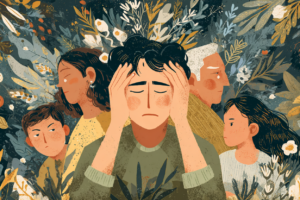

When your parent is struggling with mental illness, it can feel like you’re carrying an invisible weight on your shoulders every day. You might have trouble focusing in class, feel exhausted all the time, or notice your grades slipping. But even though it can feel like you’re alone, you don’t have to go through it without support — and school can actually be one of the best places to find help.
Talking to teachers or school counselors about what’s going on at home might feel scary or awkward, but it can make a big difference. Here’s how to start, and what to know.
Why talk to a teacher or counselor?
Teachers and counselors are there to help you succeed — not just with schoolwork, but with life. They can:
-
Give you extra time on assignments if you need it
-
Help you find a quiet place to work or take a break
-
Connect you to resources like therapy or support groups
-
Just listen, without judgment
Opening up doesn’t mean they’ll tell everyone your business. In most cases, they’ll keep what you share private, unless they’re worried about your safety.
How to start the conversation
It might feel overwhelming to figure out what to say, so here are some ideas you can use:
-
“I’ve been really stressed at home lately, and it’s been hard to focus in class. Can I talk to you about it?”
-
“My parent is struggling with their mental health, and I’m having a hard time. I don’t know what to do.”
-
“I need some support because things at home have been affecting my schoolwork.”
What to expect
When you open up to a teacher or counselor, they will most likely listen carefully without interrupting or judging. They might ask you a few questions to better understand what’s going on and how it’s affecting you. From there, they can help you make a plan for how to manage your schoolwork and handle stress, or they might offer to check in with you regularly to see how you’re doing. Sometimes, they may suggest talking to other trusted adults or professionals who can give you even more support. Remember, you don’t have to figure everything out in one conversation — you can take it one step at a time, and it’s okay to move at your own pace.
Tips for balancing school and stress at home
✅ Set small, realistic goals — Focus on one day or one assignment at a time.
✅ Create a calm study space — Even a small corner with headphones can help you focus.
✅ Take breaks when you need them — It’s okay to step away to breathe or move around.
✅ Stay connected to friends and activities you enjoy — You deserve moments of joy, even when things are hard at home.
✅ Remember self-care — Sleep, eat, and hydrate as best you can. Taking care of your body helps your mind too.
You deserve support
It can feel like you have to stay strong for everyone else, but you’re allowed to ask for help. Talking to a teacher or counselor doesn’t mean you’re weak — it means you’re brave enough to take care of yourself.
If you don’t know where to start, check out the resources on YouTalkWA.com, or ask a trusted adult to help you reach out. You’re not alone, and you don’t have to carry it all by yourself.